The Tale of Two New Jersey Shutdowns and How They Impacted the Casino Industry
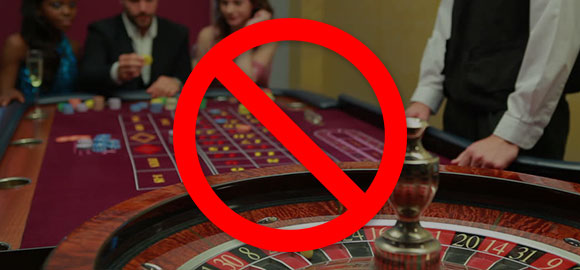
Had it not been for the astuteness of the former New Jersey Governor Jon Corzine, the casino industry in the state would have suffered a huge financial loss in the three-day state shutdown that ended on July 3, 2017. Corzine, a former CEO of Goldman Sachs, had signed a law in 2008 during his stint as the Governor of New Jersey that prevented the state’s casinos from closure even during a state shutdown.
Corzine was quoted as describing himself as “someone who is not encumbered by an old culture, historical entanglements and the status quo.” That is precisely the mindset needed when you’re confronted with a problem. Governor Corzine’s farsightedness during the first state shutdown when he was the Governor has saved the industry from staring at huge losses this time around. Let’s explore the two shutdowns in detail.
2006 New Jersey State Shutdown
The state of New Jersey experienced its first state shutdown from the midnight of July 1, 2006. This basically meant that all non-essential services were to be closed in the state. Casinos were caught in the imbroglio because their services were categorized as non-essential.
The shutdown lasted for eight days and ended with the adoption of the budget on July 8, 2006. As reported by the New York Times, the state ended up losing $1.2 million in casino tax revenue and $2 million a day in revenue from lottery.
2017 New Jersey State Shutdown
History repeated itself on July 1, 2017 and the man at the helm this time around was Governor Chris Christie. This second state shutdown led to the closure of state parks, beaches and other non-essential services. There was a lot of uncertainty around whether the casino industry would be affected by this.
"This is a market that’s very sensitive to external forces, and we’ve been on a nice little uptick here. You could lose everything you’ve gained over the last year in a very short period of time," said David Rebuck, Director of the State Division of Gaming Enforcement.
Fortunately, lessons were learnt from the first shutdown. Following the shutdown in 2006, Governor Corzine played a key role in the passing of new state law in 2008 that permitted casinos to function even during a state shutdown, albeit for a maximum of seven days.
The casino industry in Atlantic City had already been reeling under declining revenues and it was only in January 2017 that it registered its first revenue boost in 10 years. The number of casinos declined from 12 in 2006 to 7 in 2017. One of the biggest closures was that of the Taj Mahal, a casino owned by Donald Trump that was shut down in October 2016. A shutdown could have crushed the New Jersey casino industry. However, the 2008 legislation signed by Governor Corzine proved to be the saving grace, preventing the New Jersey casino industry from a severe blow that it may not have recovered from.
 Rakesh Wadhwa. Ever since, I was a school boy, I knew India was on the wrong path. Socialism was just not what we needed to get ahead. Government controlled our travel; government controlled our ability to buy and sell; and government controlled our freedom to move our money. My life has focused on the inherent rights people have. When I was in college, I never understood, what the governments meant by their "socialistic attitude". If people are free to buy, sell and move their capital themselves without any restrictions by state, then the welfare of people is inevitable & hence the countries they live in will become wealthy. The government has no right whatsoever, to point a finger at me or my business. I am not a revolutionary. I just want to light up my cigarette and not get nagged about it. I believe in non-interfering attitude to attain more.
 The Bastiat Award is a journalism award, given annually by the International Policy Network, London. Bastiat Prize entries are judged on intellectual content, the persuasiveness of the language used and the type of publication in which they appear. Rakesh Wadhwa won the 3rd prize (a cash award of $1,000 and a candlestick), in 2006.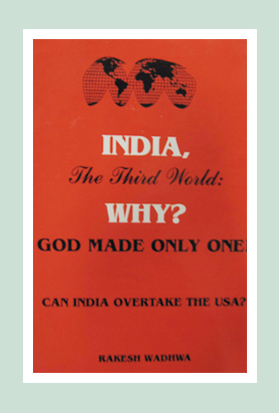
What the readers are saying…