The Regulatory Trap: Are the Most Regulated Industries the Least Innovative?
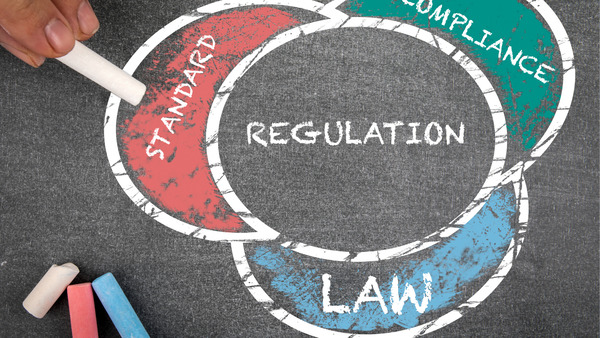
Why does it take 10 years to bring a life-saving medical drug to the public, but only 10 months to launch a social media app? It isn’t the science; it’s all about the red tape. We are currently living through a massive tug-of-war between two powerful forces: the need for safety and the hunger for progress. When an industry becomes over-regulated, it often falls into a trap where following the rules becomes more important than innovating for a better future.
The free market is supposed to be a race where the fastest and smartest win. But with regulatory hurdles, the race can slow to a crawl. Also, new regulations keep cropping up. Efforts to eliminate every possible risk can kill the competition that makes our lives better.
The Regulatory Trap
Industries with the most rules end up with the least change. In a free market, companies compete by moving fast and trying new ideas. But in highly regulated sectors, like finance or healthcare, almost every move must be compliant. So, the government’s guidebook drives the market rather than competition or consumer choice. When the law dictates exactly how a product must be made and how it is served to customers, there is very little room for an entrepreneur to think outside the box.
This is exactly what happened with the restrictions imposed by the US FAA’s rules on “Beyond Visual Line of Sight” (BVLOS) flights. This meant companies couldn’t fly delivery drones if a person couldn’t see them. This rule effectively stopped the US drone delivery industry from growing for a decade, while other countries moved ahead. It was only in late 2025 that new executive orders were signed to finally cut through this red tape.
The EU’s General Data Protection Regulation (GDPR) does much the same. While the law protects privacy, studies show it has significantly raised costs for small businesses. Now, the new EU AI Act (2025) creates a “risk-based” system. For many startups, the fear of high fines for “high-risk” AI means they choose to launch their products in the US or Asia, instead of Europe.
In Asia, the regulatory trap looks very different from the West. While the US and EU often struggle with privacy and safety rules, China and India face traps rooted in political alignment and bureaucratic friction.
In China, innovation is encouraged, but only if it aligns with the state’s strategic goals. This creates a trap where “Safe Innovation” is funded, while “Disruptive Innovation” is often penalised.
We saw this after the 2021 crackdown on giants like Alibaba and Tencent, when a new regulatory regime took hold. By 2024 and 2025, the State Administration for Market Regulation (SAMR) introduced stricter algorithm filings and “Socialist Value” certifications for AI. Startups now face a “Security Review” for any AI model. This has created a bottleneck where small firms spend more time on political compliance than on improving their code.
This has led investors to shift their funds away from “consumer-internet” (apps/games) towards state-favoured tech (chips/robotics) because it is politically safer, even if the market demand for apps is higher.
The Paradox of Innovation
The relationship between regulation and innovation isn’t that simple. It’s a paradox, where rules can act as a wall, but they can also be a stepping stone.
For example, when the government sets a strict rule that cars must produce 95% less carbon, it forces companies to invent electric engines. This is “induced innovation.” Similarly, the UK created Regulatory Sandboxes, where companies can test new ideas in a safe, rule-free environment for a short time.
Ironically, regulatory traps have also led to unique types of innovation. Take China’s DeepSeek success. Due to US chip sanctions and local regulations, Chinese firms innovated in efficiency, learning to train massive AI models on less powerful hardware. Similarly, in India, banking regulations made services too slow to reach rural areas, which led to the creation and popularity of UPI payments.
Regulators often operate with a significant disconnect from actual market dynamics, technological advancements and evolving customer preferences. Without this foundational understanding, regulations frequently amount to firing in the dark. While they may fail at “protecting” customers, they do succeed in curbing innovation.
 Rakesh Wadhwa. Ever since, I was a school boy, I knew India was on the wrong path. Socialism was just not what we needed to get ahead. Government controlled our travel; government controlled our ability to buy and sell; and government controlled our freedom to move our money. My life has focused on the inherent rights people have. When I was in college, I never understood, what the governments meant by their "socialistic attitude". If people are free to buy, sell and move their capital themselves without any restrictions by state, then the welfare of people is inevitable & hence the countries they live in will become wealthy. The government has no right whatsoever, to point a finger at me or my business. I am not a revolutionary. I just want to light up my cigarette and not get nagged about it. I believe in non-interfering attitude to attain more.
 The Bastiat Award is a journalism award, given annually by the International Policy Network, London. Bastiat Prize entries are judged on intellectual content, the persuasiveness of the language used and the type of publication in which they appear. Rakesh Wadhwa won the 3rd prize (a cash award of $1,000 and a candlestick), in 2006.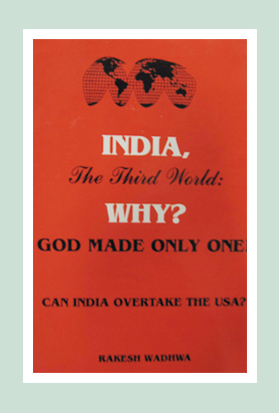
What the readers are saying…