Sweden and the Art of Resurrection of Successful Free Trade
Throughout Europe is debt, disarray and gloom like nowhere else. However, one country has suddenly shown the entire continent, how it is done away with. Until recently, Sweden suffocated under its Keynesian principles, ‘socialist’ outlook, and social-welfare shaped policies choked growth. It has now changed its policy of constant and exorbitant government tax and spending increases. Today, GDP growth is at 4% and the markets have been opened up.
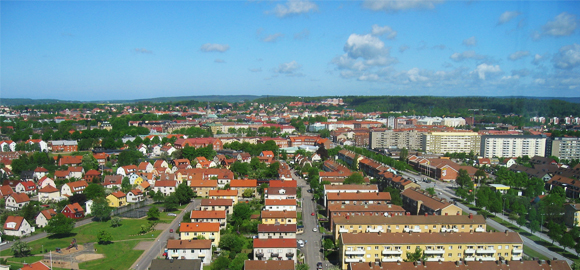
The Free Trade Story of Sweden
It has been an erroneous assumption that Sweden was always socialist. The World Values Survey states that the country boasts of one of the highest degrees of individualism in the world. It ranks 21st out of 160 countries in the Index of Economic Freedom. ‘Socialism’, for which Sweden is discredited, lasted only for a couple of decades- the only period of decline in an otherwise successful Swedish story.
A hundred and fifty-odd years ago, Sweden was one of the poorest and the most dependent nations in the world. Then its finance minister, Gripenstedt launched unheard of reforms and opened up the nation to free trade. The sixty years that followed up until the middle of the twentieth century saw Sweden zoom ahead of everybody else in economic growth. Its economy flourished as the tax burden on its people was lesser than in any of its European counterparts. Post the war, Sweden lost its way as a pack of radical socialist wolves and ‘reformed’ it’s open and low tax trade policies.
However, the Swedish trend by then had caught up with the rest of the world, but relics of the old model inspired the country to open up trade again and go on the track which had once made it great. Reforms included privatizations, liberalization of its central bank, and institution of its famous ‘school vouchers which made way for choice and competition in education. The reforms were gradual, and laid the path for a relatively freer and competitive economic system.
Sweden and its Free Market Model Today
Of late, Sweden has refused to support leftist policies. Recently, there has been an opening up of its borders to allow for labor migration. The capital, Stockholm, has decreased property taxes and has done away with the wealth tax. Markets have been deregulated under the past few governments. The idea is still of a social welfare society in conjunction with a free market economy at its core. Fiscal discipline and good governance have resurrected its economy though its abundance of welfare schemes, preventing it from achieving its potential.
 Rakesh Wadhwa. Ever since, I was a school boy, I knew India was on the wrong path. Socialism was just not what we needed to get ahead. Government controlled our travel; government controlled our ability to buy and sell; and government controlled our freedom to move our money. My life has focused on the inherent rights people have. When I was in college, I never understood, what the governments meant by their "socialistic attitude". If people are free to buy, sell and move their capital themselves without any restrictions by state, then the welfare of people is inevitable & hence the countries they live in will become wealthy. The government has no right whatsoever, to point a finger at me or my business. I am not a revolutionary. I just want to light up my cigarette and not get nagged about it. I believe in non-interfering attitude to attain more.
 The Bastiat Award is a journalism award, given annually by the International Policy Network, London. Bastiat Prize entries are judged on intellectual content, the persuasiveness of the language used and the type of publication in which they appear. Rakesh Wadhwa won the 3rd prize (a cash award of $1,000 and a candlestick), in 2006.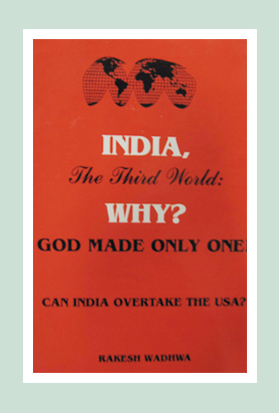
What the readers are saying…