Maritime Supply Chain Adaptations in the Red Sea
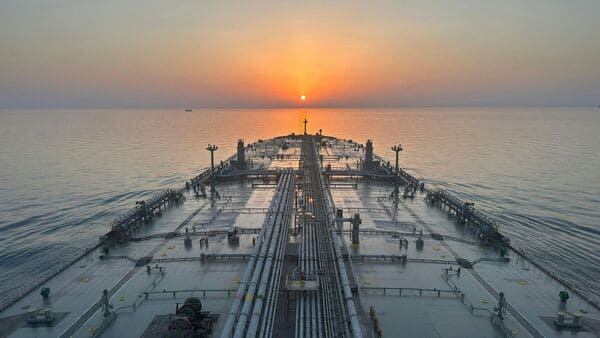
Global shipping routes have faced one disruption after another in recent years. First, the Red Sea crisis made container ships seek an alternative route to the Suez Canal. The most viable choice was to go around the Cape of Good hope, which increased the journey by many nautical miles. Then, the US-Iran war brought a much larger shock to energy shipping, with the closure of the Strait of Hormuz.
For companies moving goods around the world, there was no simple fix. Ships had to take longer routes, freight costs rose and cargo owners had to rethink delivery schedules. The response to the crises has largely come from the industry itself, with carriers and logistics companies making decisions based on security, cost and available capacity.
When Shipping Was Forced to Find Another Route
The Suez Canal normally provides the shortest sea link between Asia and Europe. But Houthi attacks on commercial vessels since mid-December 2023 made the route too risky for many carriers. Shipping companies responded by sending vessels around the Cape of Good Hope.
Although this was a safer route, costs increased and effective capacity declined because ships took much longer to complete each journey. By May 2025, tonnage passing through the Suez Canal remained about 70% below the 2023 levels. Rerouting ships increased operating and insurance costs. Global tanker freight rates soared, reaching record highs of nearly $15 per barrel for very large crude oil carriers by September 2026. Shipping companies also had to account for the greater risk of operating near conflict zones, while importers faced longer and less predictable delivery times.
In March 2026, major carriers, including Maersk, Hapag-Lloyd and CMA CGM, were again diverting ships around Africa following the escalation of the US-Iran conflict and closure of the Strait of Hormuz. Some carriers added war-risk and emergency conflict surcharges, with the higher cost being passed through the supply chain.
But this also created new demand elsewhere. African bunkering hubs, for example, saw more business as vessels travelling around the Cape required additional services. This shows how the flexibility of private businesses can come to the rescue. A shipping company does not need to wait for a new infrastructure project before responding to a change in demand. It can alter a sailing schedule, move vessels, negotiate new contracts or use another port.
Markets naturally adjust to disruption. A route becomes more expensive or risky, so companies look for alternatives. Prices change, vessels move and supporting businesses expand in response to the new pattern of demand.
Market Response Balances Economics
When a route suddenly becomes dangerous, its economics change. Insurance costs can rise. Fuel consumption increases when ships take longer routes. Tanker availability falls when vessels spend more time at sea. Higher freight rates then give operators a reason to look for capacity elsewhere.
The same process works in reverse when conditions improve. In September, Maersk and Hapag-Lloyd announced additional services through the Suez Canal, showing that carriers were willing to reconsider earlier routing decisions as conditions changed.
This adjustment isn’t automatic. Companies still have to assess security risks, customer demand and whether a new route makes financial sense. But they have considerable freedom to make those decisions quickly.
The Red Sea and Hormuz disruptions have become a real-world test of supply-chain flexibility. Routes changed. Ports picked up new business. Tankers and cargoes were redirected. Prices moved to reflect the new risks.
Governments and international organisations must still play a role in ensuring maritime security and keeping major trade routes open. But once a disruption occurs, it is the thousands of individual commercial decisions that determine how much trade can continue.
 Rakesh Wadhwa. Ever since, I was a school boy, I knew India was on the wrong path. Socialism was just not what we needed to get ahead. Government controlled our travel; government controlled our ability to buy and sell; and government controlled our freedom to move our money. My life has focused on the inherent rights people have. When I was in college, I never understood, what the governments meant by their "socialistic attitude". If people are free to buy, sell and move their capital themselves without any restrictions by state, then the welfare of people is inevitable & hence the countries they live in will become wealthy. The government has no right whatsoever, to point a finger at me or my business. I am not a revolutionary. I just want to light up my cigarette and not get nagged about it. I believe in non-interfering attitude to attain more.
 The Bastiat Award is a journalism award, given annually by the International Policy Network, London. Bastiat Prize entries are judged on intellectual content, the persuasiveness of the language used and the type of publication in which they appear. Rakesh Wadhwa won the 3rd prize (a cash award of $1,000 and a candlestick), in 2006.
What the readers are saying…